
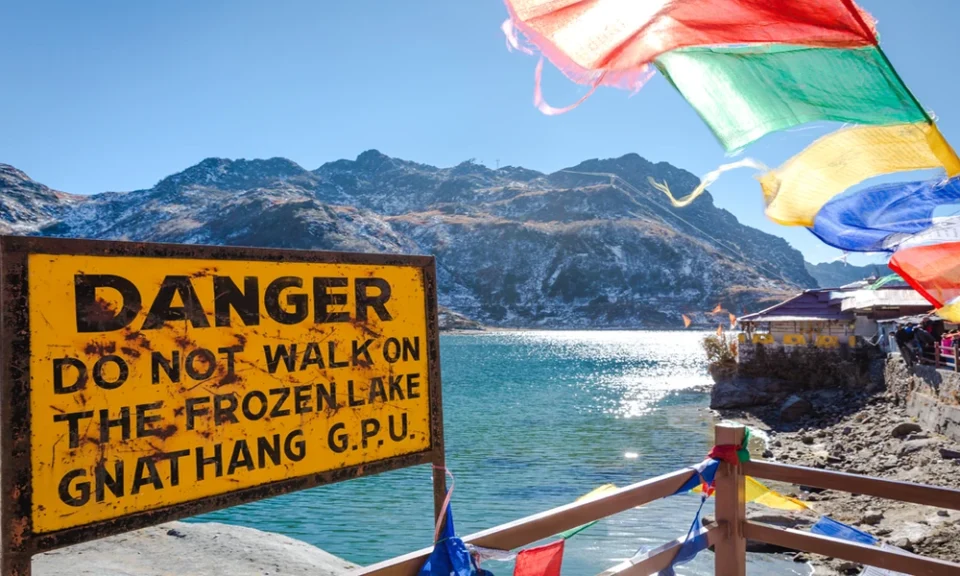
Most Indian visitors to Sikkim need far less paperwork than they fear, but the restricted areas are where trips go wrong. Nathu La, Tsomgo (Changu) Lake, Lachen, Lachung, Yumthang and Gurudongmar all involve permits, and some depend on how you travel, what day it is and what the weather has done to the roads. This guide explains what Indian citizens need, how the process usually works, and where to be careful. Rules and fees change, so treat the details below as a planning guide and confirm them before you book.
Do Indians need a permit for Sikkim at all?
Indian citizens do not need an Inner Line Permit to enter Sikkim and travel to Gangtok, Pelling, Ravangla, Namchi, Yuksom or Kalimpong. Carry a government photo ID (Aadhaar, passport, voter ID or driving licence), as it is checked at the Rangpo entry point and by the permit offices. Foreign nationals follow a different system with a Restricted Area Permit, so this post is for Indian travellers only.
The permits that matter are for the border and high-altitude zones. These are issued locally, usually through the tourism department’s offices in Gangtok, and most trip planners and registered taxi operators arrange them for you.
Nathu La: who can go and when
Nathu La, at about 4,310 m on the Indo-China border, is about 55 km from Gangtok. A round trip takes most of a day. Indian citizens can visit, but with conditions that catch people out.
- Days: Visits are generally allowed on specific days of the week and are closed on certain days, commonly Monday and Tuesday. Confirm the current schedule.
- Quota: Daily vehicle numbers are limited, so booking a few days ahead is wise, especially in May-June and October.
- Vehicle: You must travel in a registered local taxi, usually a Sumo or Bolero shared or reserved. Private cars from outside Sikkim are not normally allowed on this stretch.
- Documents: Original photo ID and passport-size photographs are typically required, and the permit is arranged one day in advance.
- Children and seniors: Age and health restrictions can apply because of the altitude. Check with your operator.
The route usually includes Tsomgo Lake (about 3,780 m) and often Baba Mandir. Altitude headaches are common at Nathu La, so keep the day relaxed, drink water and skip heavy meals. Landslides and snow can close the road with little notice, and the permit does not guarantee entry.
North Sikkim: Lachen, Lachung, Yumthang and Gurudongmar
North Sikkim is a Protected Area, and it is the part of the state most dependent on permits. Indian travellers need a permit for the Mangan district’s northern zones, and your vehicle is registered at the checkpoints.
How the process usually works
1. Choose your route and dates, and decide whether you will base at Lachen, Lachung, or both.
2. Share ID copies and photographs with your operator, ideally several days before arrival.
3. Permits are generally processed from Gangtok or Mangan, and are valid for the dates and places stated.
4. Carry printed copies, since checkpoints at Chungthang and beyond ask to see them.
Independent travellers often cannot simply drive up. Many stretches require a local registered taxi, and self-drive from outside Sikkim is often restricted. Confirm this if you plan a road trip.
Where the permit takes you
Lachung is the base for Yumthang Valley (about 3,500 m, with rhododendrons peaking around April-May) and Zero Point, which is higher and often snowbound. Lachen is the base for Gurudongmar Lake at roughly 5,100 m, one of the highest lakes in India, and Thangu Valley. Gurudongmar involves an early start, a long drive and real altitude, so many visitors sleep poorly at Lachen and feel the effects at the lake.
Not every zone is open every day. Zero Point, Gurudongmar and Chopta Valley can close in heavy snow or after landslides, and the authorities decide on the day. Keep a spare day in your plan.
Practical tips before you apply
- Photocopies and photographs: Carry several of each. Photocopy machines are scarce beyond Mangan.
- Cash: ATMs are unreliable in Lachen and Lachung. Carry enough cash for tips, snacks and incidentals.
- Network: Expect patchy coverage. Download offline maps and tell family your itinerary.
- Altitude: Do not go straight to Lachen from the plains. Spend a night or two in Gangtok first, and avoid alcohol on the first high-altitude day.
- Clothing: Layers, thermals, gloves and a windproof jacket are needed even in summer at Gurudongmar and Nathu La.
- Seasons: Road closures are most likely during the monsoon (roughly June to September) and after heavy winter snow. Spring and October-November tend to be the most reliable windows.
Common mistakes to avoid
Arriving on a closed day for Nathu La is the most frequent one, followed by assuming that a permit means the road is open. Another is booking a tight Gangtok-Lachen-Lachung schedule with no buffer. The third is travelling with an ID that does not match the name on the booking. Keep names consistent across tickets, permits and ID.
How sikkim tourism packages handle permits
If you book a package, the operator usually applies for the Nathu La and North Sikkim permits for you, provided your documents arrive on time. It is still your responsibility to carry originals and to check the current rules. A good plan builds in flexibility, for example swapping Nathu La and Gangtok sightseeing days if the weather turns. When you are comparing options, ask what happens if a permit is refused or a road closes, and whether alternatives such as Tsomgo Lake or Lachung can be substituted. Being clear on this before paying saves arguments later.
Conclusion
Indians do not need a permit just to enter Sikkim, but Nathu La and North Sikkim need advance planning, local taxis and proper ID. Check the current open days for Nathu La, allow buffer days for landslides, and acclimatise before Gurudongmar. Rules and fees change, so confirm them with the tourism department or a registered operator before you travel.
If you would like help with the permits and a realistic route, share your dates, group size and starting city with the sikkim tourism team at sikkimtourism.org, and ask for a customised itinerary.
