
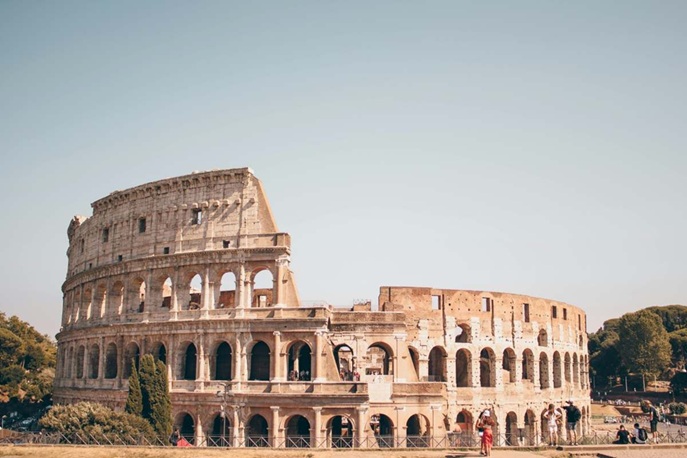
First Impressions: Moving Beyond the Landmarks
Visiting Rome often starts with the obvious: major landmarks, busy streets, long queues. But once you move past that first layer, the city begins to feel more personal. Rome isn’t a place you consume quickly. It works better when you give it time and let it reveal itself through everyday experiences.
Rather than jumping from one attraction to the next, walking between neighborhoods offers a clearer sense of how the city actually functions.
A City That Blends Old and New
Rome doesn’t separate history from modern life — they coexist. Contemporary shops operate inside centuries-old buildings. Residential streets sit just a few minutes away from major monuments. This constant overlap gives Rome a sense of continuity rather than contrast.
What stands out is how design appears in ordinary settings. You notice thoughtful interiors in small cafés, careful renovations in apartment buildings, and restrained modern additions that don’t try to overpower their surroundings. Rome doesn’t chase trends. It adapts slowly, keeping what works and refining what doesn’t.
Everyday Design and Daily Rhythm
Design here feels practical rather than decorative. It shows up in how spaces are used, how materials are preserved, and how newer elements respect what’s already there. The city feels lived in, not curated.
That same mindset carries over into daily routines. People move at their own pace, neighborhoods maintain their character, and small businesses remain part of the urban fabric.
Eating as Part of Local Life
Food in Rome follows a similar philosophy. Meals are straightforward, menus are focused, and many places rely on a handful of traditional dishes done consistently well. Whether you’re stopping for something quick or sitting down for dinner, eating here feels integrated into daily life rather than treated as a separate experience.
Markets, bakeries, and neighborhood trattorias shape how you move through the city, often becoming familiar stops over just a few days.
Crossing Into Trastevere
As you explore further, crossing the river leads to Trastevere, an area that feels more residential while still being close to central Rome. During the day it’s relatively quiet, with locals going about their routines. In the evening it becomes livelier, but it keeps a neighborhood atmosphere that makes it easy to stay awhile.
This part of the city suits travelers who prefer staying somewhere that feels lived-in rather than tourist-oriented. Choosing a hotel in the heart of Trastevere can make it easier to build a natural rhythm around your days — walking instead of commuting, returning to the same café, and ending evenings close to where you’re staying.
Finding Your Own Pace
Rome doesn’t ask you to rush. Some days are shaped by walking and exploring; others slow down naturally. The city supports both movement and pause, often within the same afternoon.
In the end, Rome isn’t defined by a single sight or neighborhood. It’s shaped by how you move through it — calmly, attentively, and with room for spontaneity. That’s where its character comes through.
